
Embedded software development services.
The software inside physical products: firmware, embedded Linux, device drivers, on device applications, connectivity and Edge AI. Engineered alongside the hardware, from board bring up through production.







Where embedded software meets the real product.
Integration is where the schedule comes together.
Electronics and firmware have to converge on the same system behaviour. Architecture, interfaces and failure handling need to work together from the beginning so integration does not become the part of the project that absorbs the time planned for testing.
The bench is not the field.
Temperature, supply quality, electrical noise, sensor drift and operator behaviour all affect how a product performs. Embedded software has to account for the conditions the system will actually encounter.
Prototypes have to become products.
A prototype can prove the concept and still need further engineering before it can be manufactured, tested at production rate, updated in the field or maintained by another engineer.
Why embedded software is engineered differently.
Written against real hardware.
Firmware is developed around the actual constraints of the board: timing, memory, power budget and measured peripheral behaviour rather than assumptions alone.
Deterministic where it matters.
Control loops, safety states and time critical paths are designed around bounded timing and verified against it.
Built to be maintained.
Source code, build environments and configuration are structured so another engineer can build, debug and extend the product later.
Field behaviour designed in.
Diagnostics, logging, recovery paths and remote update are considered as part of the architecture because a deployed product has to remain observable and maintainable.
Embedded software development services.
Firmware development
Bare metal and RTOS firmware for microcontrollers and SoCs, developed around the timing, memory and power constraints of the target hardware.
Embedded Linux development
Custom Linux environments, kernel and device tree work, boot optimisation, service management and update infrastructure for application class embedded systems.
Device drivers and board bring up
First power on of new hardware, bus and peripheral verification, device drivers for displays, sensors, storage and custom peripherals, and diagnostics for system level faults.
Embedded GUI and HMI development
Graphical applications running directly on the product, including touchscreen interfaces, operator screens, configuration, service modes and the data layer behind them.
Hardware and software integration
Sensors, actuators, motors, cameras, power paths and industrial interfaces brought together into one working system.
Test and validation
Functional, timing, endurance and environmental testing, with system behaviour characterised around the edges of the specification.
IoT and connected systems
Device connectivity, telemetry, provisioning, remote monitoring and update infrastructure for products that need to remain visible and manageable after deployment.
Computer vision and Edge AI
Image processing, model training and on device inference designed around the actual hardware, with attention to accuracy, latency, memory and power.
Bare metal and RTOS firmware for MCUs, SoCs and microprocessors, written to the hardware architecture in front of us.
BSPs for Linux and RTOS platforms, bridging the hardware and the operating system layer.
Low level drivers for display, video, storage, connectivity and custom peripherals.
FreeRTOS and Zephyr integration, including moving existing application code onto an RTOS where the project calls for it.
Yocto and Buildroot distributions, kernel customisation, driver integration and power optimisation.
BLE, WiFi and cellular connectivity with provisioning, telemetry and secure OTA update capability.
ML models deployed on device with TensorFlow Lite and ONNX, sized for power constrained hardware.
Embedded behaviour validated against simulated inputs and conditions before physical iterations are committed.
Secure boot, firmware signing, encrypted communication and anomaly detection at runtime.
Support from prototype into manufacture, including production test and compliance testing preparation.
Embedded software that holds up where the product actually runs.
Describe the product and the stage it has reached. We reply with the engineering next step.
What the engineering produces.
One team across the boundary.
Hardware, firmware, embedded applications and connectivity are engineered together, so interface decisions are made as part of one system.
Products engineered for deployment.
System behaviour is characterised under the conditions the product is expected to encounter, not only under controlled bench conditions.
Engineering that can be maintained.
Source code, build environments, configuration and documentation are organised so the product can be taken forward by the client or another engineering team.
Updatable products.
Telemetry and remote update infrastructure can provide visibility into deployed devices and support controlled software changes in the field.
A path to manufacture.
Testing, configuration management and manufacturing handover are treated as engineering work throughout development.
Technologies and platforms.
Embedded platforms
Microcontrollers, application processors, embedded Linux platforms and custom carrier boards.
Representative platforms include STM32, Nordic nRF, NXP i.MX, Texas Instruments and Raspberry Pi Compute Module.
Software environments
Bare metal, FreeRTOS, Zephyr, Embedded Linux, Yocto and Buildroot.
Languages and application frameworks
C, C++, Python, shell, Qt, QML and LVGL.
Interfaces and buses
UART, SPI, I2C, USB, CAN, RS 485, Modbus, Ethernet, GPIO and analogue interfaces.
Connectivity
WiFi, BLE, cellular connectivity, MQTT, HTTPS, device provisioning and OTA update systems.
Vision and Edge AI
Computer vision, image processing, model training, ONNX, TensorFlow Lite and on device inference.
Engineering tooling
Git, JTAG, SWD, GDB, OpenOCD, logic analysis, power analysis and continuous integration for firmware builds.
How an embedded software engagement works.
Review
The existing hardware, firmware, interfaces, requirements and known problems are reviewed before implementation begins.
Architecture
System behaviour, software structure, hardware interfaces, data flow and key technical decisions are defined before implementation.
Implementation
Firmware, embedded Linux components, device drivers, applications and interfaces are developed against the target hardware.
Integration
Software and hardware are brought together and tested as one system. Interfaces, peripheral behaviour and failure conditions are characterised during this stage.
Validation
Functional behaviour, timing, endurance and relevant environmental conditions are tested against the requirements established for the product.
Handover
Source code, build environments, configuration, documentation and supporting engineering material are prepared for continued development.
Selected work.
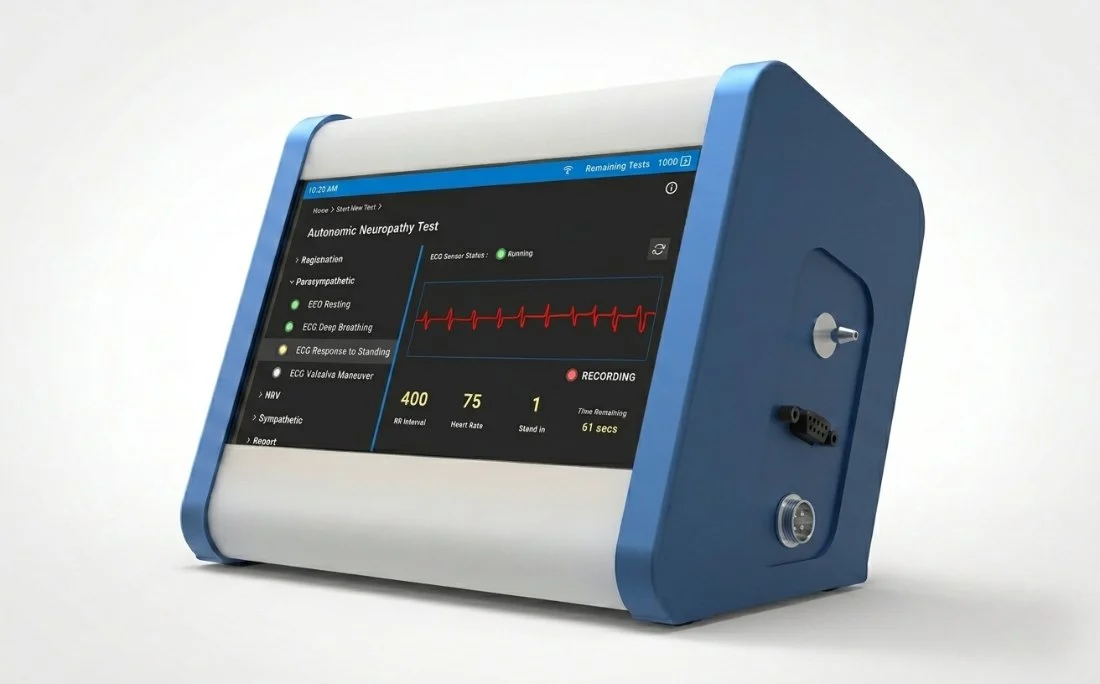
NIBRA-CS — portable autonomic neurofunction assessment
A portable clinical instrument developed from a bench prototype into a standalone embedded device for cardiac autonomic reflex testing.
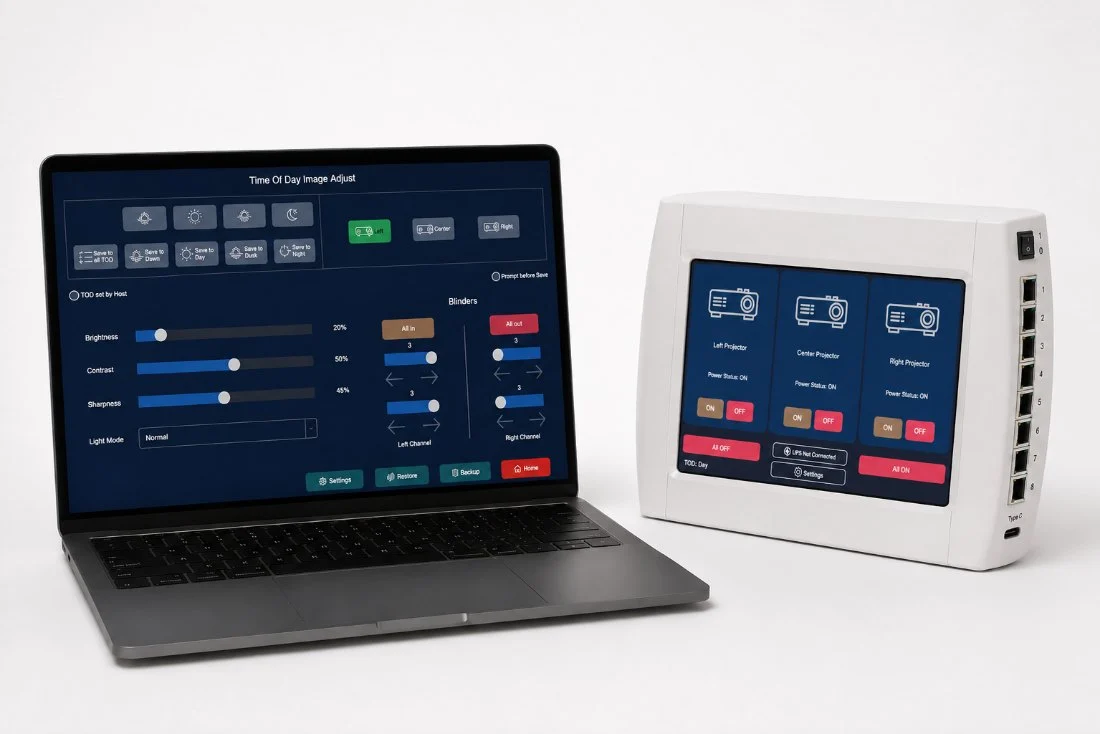
Integrated Display Controller for a full-flight simulator
An embedded Linux controller for a multi projector flight simulator visual system, combining projector control, calibration, system monitoring and a dedicated maintenance interface.
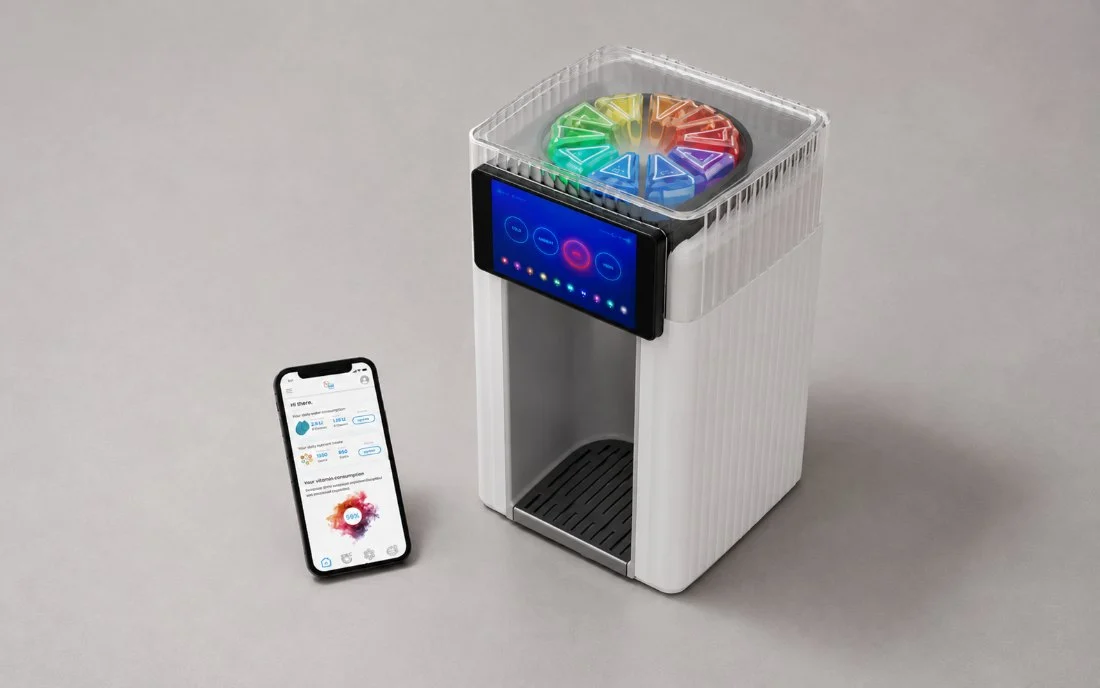
Dreep — personalised vitamin dispensing appliance
Embedded software, touchscreen interface, electronics architecture and hardware integration for a connected personalised supplement dispensing appliance.
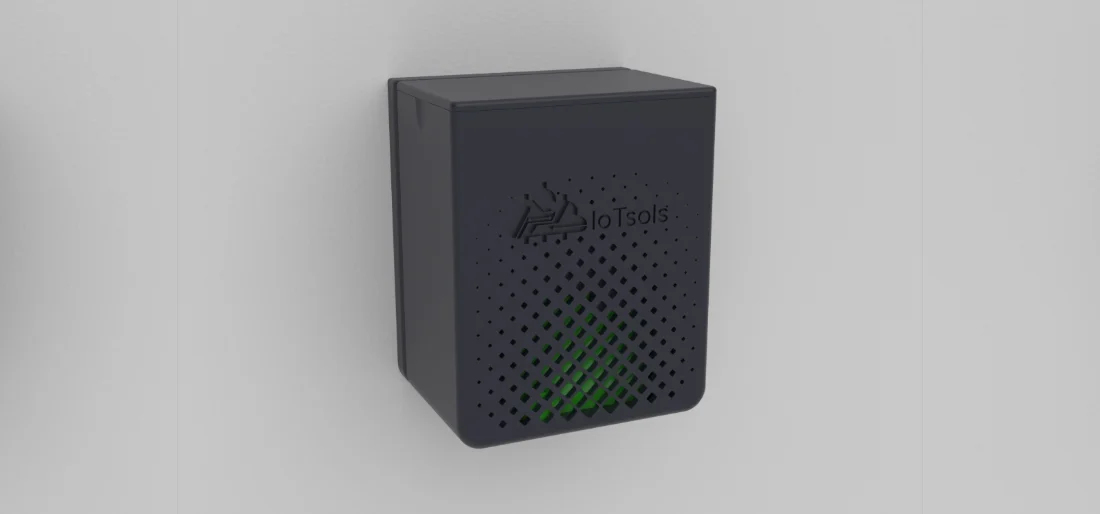
C100 — AI-enabled environmental monitoring
A compact environmental sensing node combining multi parameter sensing, embedded software, IoT monitoring and an application specific machine learning workflow.
Frequently asked questions.
What are embedded software development services? ▼
The engineering of the software that runs on a product's own hardware: firmware, embedded Linux, device drivers and the applications the device presents.
Do you develop the embedded GUI as well as the firmware? ▼
Yes. The touchscreen interface and the firmware underneath it are developed as one system.
Can you work with an existing prototype? ▼
Yes. Existing hardware and software are reviewed and characterised, then taken forward from their current state.
How do you ensure hardware and software compatibility? ▼
Buses, peripherals and timing are verified on the actual board before production code is written, so integration issues surface early.
Do your embedded software development services include long-term support? ▼
Yes. Maintenance, debugging and over the air updates can continue after handover under an agreed arrangement.
Who owns the embedded software IP? ▼
You do. Deliverables are assigned to the client as they are paid for.
What do clients receive at handover? ▼
Source code, build environments, configuration and documentation, handed over as sources with build instructions rather than binaries.